
Toward Feminism Through Biology
At the dawn of sexual reproduction, all gametes were equal and invested in offspring identically. Then some started cheating. Let's unpack how biology makes the case for feminism better than any manifesto.
Somewhere on a coral reef, two flatworms approach each other and begin to feel each other out in turn. After some time they rear up and bare their penises, with which they begin to… fence.
The reason is that these worms are hermaphrodites. As a result of the duel, which can last up to an hour, they sort out which of them will have to bear all the costs of carrying offspring. The winner is the one who first manages to stab the opponent several times and inject sperm, thereby fertilizing the opponent and condemning them to the role of "female."
So it turns out a flatworm doesn't want to be female? Why? What is the essence of the "female" and "male" roles from the standpoint of evolutionary benefit, costs, and reproductive strategy?
Modern culture and religion, as well as the ethologists of the past, have often viewed sexual behavior, copulation, and the courtship preceding it as a joint activity of both partners for the good of themselves or the species1. However, the evolutionary reality of sexual strategies is far from this idyllic picture.
What is a "male" and a "female"? As mammals — and, let's admit it, as anthropocentrists — we usually associate them with the presence of a penis or mammary glands, with the process of gestation, and with chromosomal differences. But in most species things are different.
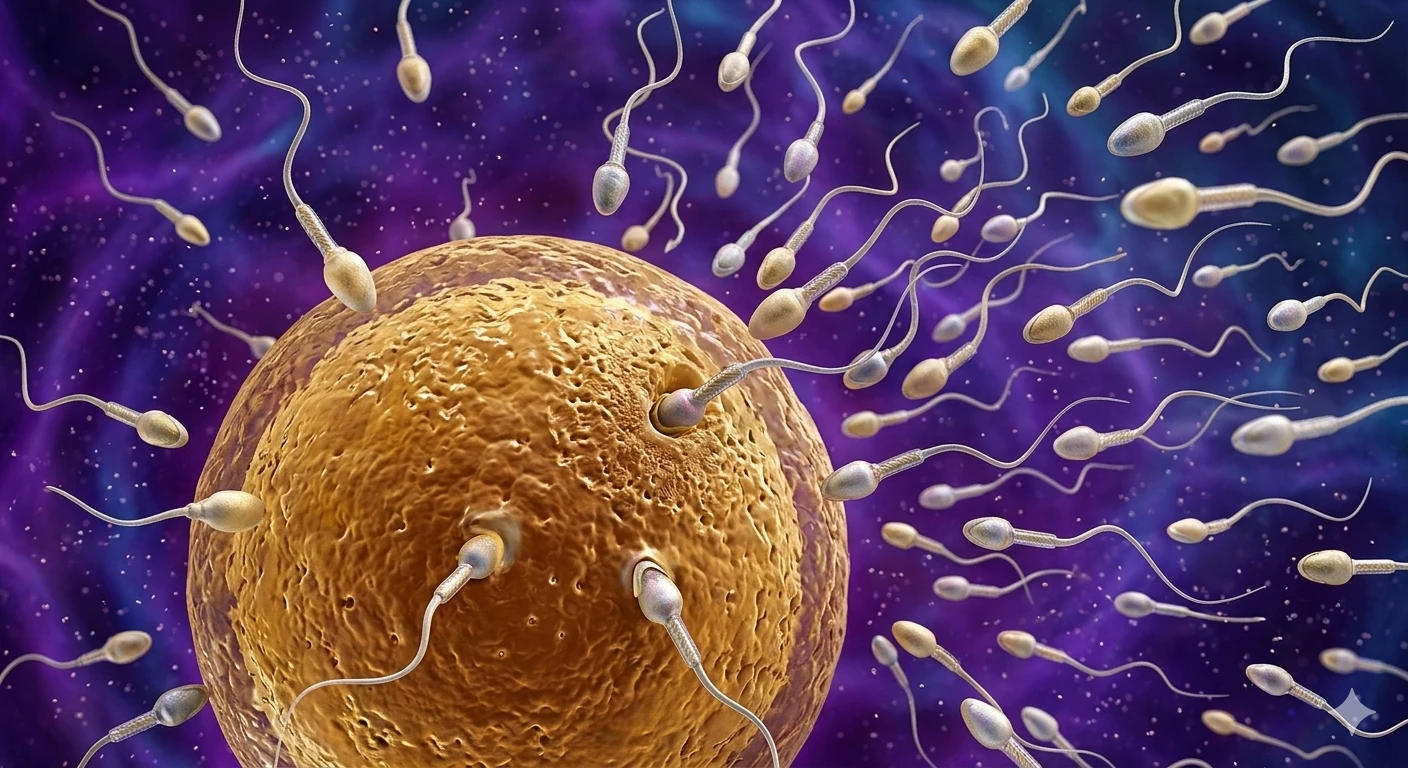
As Richard Dawkins writes in The Selfish Gene2, males and females of frogs have practically no external differences apart from gamete size, so they could just as well be designated sex 1 and sex 2. However, one universal distinction applies to all species, including plants: the gametes of males are smaller and more numerous, while the gametes of females are larger and fewer in number.
What does this mean? The male does not contribute an equal amount of nutrients with the female at the moment of fusion. Genes — yes, exactly 50% — but not nutrients. Sperm cells effectively serve as a means of rapidly delivering genes, whereas the egg cell brings along, in addition, the resources for the development of the embryo.
Given such asymmetry, a male can potentially fertilize an unlimited number of partners, producing sperm in gigantic quantities, while the female is constrained by the resources required for gestation and care of offspring3. From this our exploitation is born.
It is believed that at the dawn of sexual reproduction isogamy reigned — equal gametes and an equal contribution of nutrients for the development of the embryo. The hypothesis is that a small enlargement of some gametes provided an evolutionary advantage and made it possible to ensure the survival of offspring with greater probability. However, this strategy contained its own Achilles' heel. It opened up the possibility for exploitation and selfishness. The presence of gametes that were slightly larger than necessary allowed small gametes the opportunity to fuse with the large ones and "profit" from this, meaning that they could invest a little less in the offspring.
The "honest" strategy of large gametes opened the way for the "selfish" and "exploitative" strategy of the small ones4. As a result of this constant battle, what survived and crystallized were extremely large and honest altruists, and extremely small and nimble gametes. I'm sure you've guessed which of these we now call egg cells and sperm cells.
Without going into the further intricacies of finding an evolutionarily stable strategy (ESS), we can confidently assert that in most species the work of caring for offspring and providing them with resources falls on the female, especially in mammals and in us, humans5. The female invests her own bodily resources in gestation, undergoes hormonal changes, and after birth provides care and feeds with milk, which is itself not so easy to produce.
Thus, having been deceived at the dawn of evolution, we bear the main burden of continuing the offspring of the species Homo sapiens, while finding ourselves in a vulnerable position at every stage of this work.
And what have women received in return?
There is no objective reality or biological determinacy of "good" behavior and care for those near us or for those who bear greater costs through gestation and care of offspring. This is part of a mythologeme — exactly like "human rights" or "Buddhism" — that our species invented while trying to survive in the new conditions of masses of individuals concentrated in one place under a high-tech reality.
Why is it that, instead of an understanding of female physiology and of the costs at least at the level of the menstrual cycle (obtained as the result of that sexual standoff) and of pregnancy, we have received only disregard and the exploitation of our vulnerabilities, which we did not choose at birth? Why have layers of memes in the form of culture, religious institutions, and entire political strategies turned out to be built around those whose evolutionary strategy fits into the succinct thesis "shrug off responsibility and ride off into the sunset"?
Biological reality cries out to us about how high our value and complexity are, what a titanic burden evolution itself has placed upon us. So why not follow values that would ensure women's reproductive health, and treat all the features of our organism not as something to be hidden behind the threshold of the church during menstruation or to be called by euphemisms like "those days of the month," but rather as something to be supported, by organizing a comfortable and safe environment for every woman?
As a result of evolution there were no "weak" or "strong" sexes, no leading and secondary roles, no more developed and intelligent or more worthy parts of the population of a single species. By the will of chance — namely, through the divergent strategies of gametes — we had to take on greater costs than men. The time has come to acknowledge this and to discard the old forms of power relations built on the exploitation of vulnerabilities.
-
Parker, G.A. 1984, Evolutionary stable strategies./In: Behavioural ecology: An evolutionary approach (eds J.R. Krebs and N.B. Davies), pp. 62-84. 2nd edition. Oxford: Blackwell scientific publications. ↩
-
Richard Dawkins, "The Selfish Gene" (4th ed); United Kingdom: Oxford University Press., 2016 ↩
-
Parker, G.A., Baker, R.R., Smith, V.G. F., 1972, The origin and evolution of gametic dimorphism and the male-female phenomenon// Journal of theoretical biology, 36, 529-533 ↩
-
Trivers R. L., The evolution of reciprocal altruism// Quarterly review of biology, 46, 479-484 ↩
-
Trivers R. L., 1974, Parent - offspring conflict// American zoologist, 14, 249-264 ↩